Coffee
Ombligon Nestor Lasso – Colombia
19.8 EUR
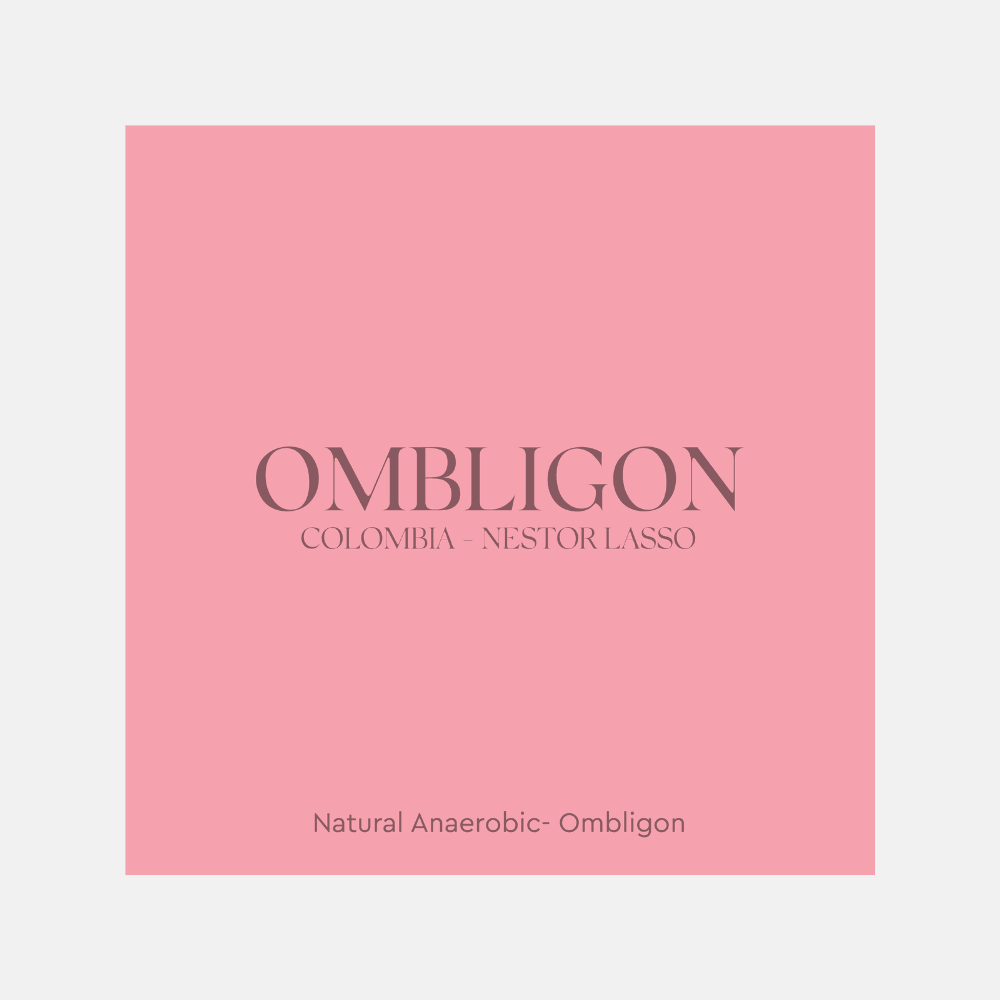
Colombia. Ombligon. Natural Anaerobic. Every bean has a story An amazing – and in the past unknown coffee variety – grown in Colombia, Ombligon comes from renowned producer Nestor Lasso. About Nestor Lasso This amazing lot comes from a renowned producer, Nestor Lasso of Colombia. Every coffee he produces is a unique and indulgent experience. His farming and process practices, plus a range of exotic coffee varieties (Ombligon, Gesha, Sidra, Chiroso, Pink Bourbon) are the perfect combination for greatness in every cup. He runs Finca El Diviso in Huila, Pitalito, Colombia. In 2018, Nestor Lasso and his brother Adrian took over the family farm and branched out into specialty coffee and experimentation. Today, the two brothers have teamed up with Jhoan Vergara, also the child of a coffee farmer, to merge their family farms to create El Diviso. Ombligon Variety Ombligon coffee variety is the localized term used for this Ethiopian Landrace variety, cultivated in Huila, Colombia. It has great potential due to its Ethiopian genetics, which truly show in the cup. The cherry is elongated and has a belly button shape on the base. Which is why it called by locals Ombligon (belly button in Spanish!). It is rare to find and there is talk that the variety arrived to Colombia from Central America, but there is no record of the precise provenance nor date. Ombligon has similar characteristics to Caturra, such as wide leaves, cherries which grow close together, branches which grow vertically, and high yields. However, many Colombian coffee professionals agree that Ombligon could be a natural mutation of other varieties like Pacamara, Bourbon, or even Castillo. This is mostly because of the high yield potential and resistance to coffee leaf rust. Ombligon Processing At the farm, the team selects the darker colored cherries and pick them at optimal maturity stage, with brix degrees ranging between 24 – 26 degrees. They remove the floaters and wash the cherries with 5% alcohol to remove impurities and unwanted bacteria. The process begins with with 48-hours of oxygen-exposed fermentation, folowed by a 12-hour resting period and then another 60 hours of additional open bag fermentation. The bags are opened periodicaly to maintain a temperature between 30 and 40 °. At the end of the 60 hours, they leave the bags open to increase the temperature before washing. After that, they load the cherries into a plastic tank for a 24 hours anaerobic fermentation with mosto recirculation. The next step of the process is quenching. They wash the cherries and fermentation stops with hot water at 50 degrees (thermal shock). Quenching is a specific method of rapidly cooling down coffee beans or cherries. It is a critical step in various coffee processing methods. as it contributes to fixate the compounds released during fermentation. The combination of hot and cold water first opens the pores in the bean and the fixates the volatile compounds. Finally, drying takes place. Natural sun drying first and then final stage in a stainless steel dehumidifier for 70 hours at 35 °. You don’t wanna miss this unique variety from Colombia! Another great coffee from Nestor Lasso is Bananarama or the super sweet decaf Pink Velvet – check them out!
- Origin
- Colombia Huila
- Process
- anaerobic
- Varietal
- Ombligon
More from Create Coffee Roasters
Other coffees on their shelf


Same origin · Colombia
More Colombia coffees from European roasters


Same process · anaerobic


